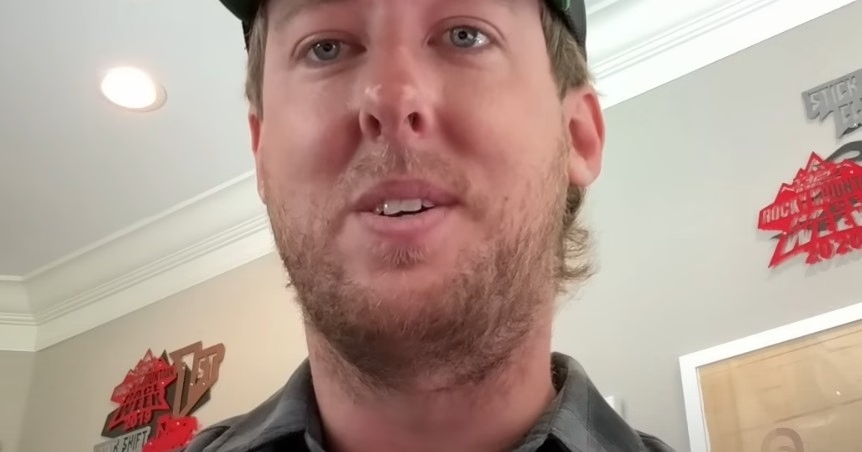
The Redneck Who Became a Racing Mogul
There is a version of the American dream that runs on tire smoke and burnout rubber, and Garrett Mitchell is living it. Better known to millions of fans as Cleetus McFarland, Mitchell turned a goofy internet persona into one of the most diversified businesses in modern motorsports. His empire now spans a YouTube channel with millions of subscribers, a merchandise operation that moves truckloads of product, live racing events that draw huge crowds, and a race track he personally owns in Florida. Along the way he has become a legitimate stock car driver too, competing in some of the most competitive feeder series in the country. Most estimates place his net worth at around ten million dollars, a figure that reflects years of reinvestment rather than overnight luck.
What makes this story unusual is the order of operations. Most racing drivers start with family money or corporate sponsors and then chase fame. Mitchell built the audience first, then used that audience to finance everything from race cars to an entire speedway. Every video he posts doubles as advertising for his events, his parts business interests, and his merchandise line. It is a self-reinforcing machine, and it may be the most original business model in grassroots racing today.
Quick Facts
| Detail | Information |
|---|---|
| Real Name | Lawrence Garrett Mitchell |
| Known As | Cleetus McFarland |
| Born | April 5, 1995, in Omaha, Nebraska |
| Profession | YouTuber, Entrepreneur, Stock Car Racing Driver |
| YouTube Channel Started | January 2009 |
| YouTube Subscribers | Roughly 4.6 million |
| Lifetime YouTube Views | Close to 2 billion |
| Famous Builds | Leroy (Corvette), Mullet (El Camino), Neighbor, Ruby |
| Major Asset | Freedom Factory race track, Manatee County, Florida |
| Business Stake | Twenty percent of Motion Raceworks, a performance parts manufacturer |
| Spouse | Madison Lutz Mitchell, married December 21, 2021 |
| Estimated Net Worth | Around $10 million (widely cited estimate, not verified) |
From Omaha to the Internet: Early Life and the 1320Video Years
Garrett Mitchell was born on April 5, 1995, in Omaha, Nebraska, and grew up the way many car people do, surrounded by vehicles and the people who fix them. His father worked at a taxi company and later ran a used car lot, which meant young Garrett spent his childhood around Crown Victorias and a rotating cast of interesting machines. That early exposure quietly shaped his entire future, turning a casual interest into a genuine life passion. When he was still a teenager, he began working with 1320Video, an internet-based automotive media company run by Kyle Loftis. He started out handling the company’s social media accounts, a job that paid him just one hundred dollars a week.
The work turned out to be the perfect apprenticeship for the career he would eventually build. Mitchell learned how to post videos with titles and descriptions that people actually clicked on, how to share them across Facebook and other platforms, and how clicks on those links generated advertising revenue. He was essentially learning the economics of digital content from the inside, long before most people understood how online media worked. At the same time, he was studying law, but the pull of cars and cameras was growing stronger every month. Eventually he made the leap and left school behind to chase the content business full time.
The Birth of Cleetus McFarland
The Cleetus McFarland persona was born in 2015 during an annual drag-and-drive event known as Rocky Mountain Race Week. Mitchell attended the event as a car enthusiast, but footage of him being goofy and loud, joking about being made in America, caught fire after it was posted to Facebook. The exaggerated character resonated with viewers in a way that felt authentic rather than performed. Almost overnight, the name stuck, and Mitchell began building his YouTube presence around the persona. His real name faded into the background, used mainly by close friends and family.
In January 2009 he had started his YouTube channel, and it now operates under the Cleetus McFarland name with roughly four and a half million subscribers. The channel has accumulated close to two billion total views, a staggering number for an independent creator. His videos center on outrageous car builds, head-to-head racing competitions, and guest appearances from well-known figures in the automotive world. The formula is simple but effective, mixing genuine engineering with entertainment. Fans do not just watch the channel, they follow the cars themselves as if they were characters in a long-running show.
Cars as Characters: The Builds That Became Brands
One of the smartest moves Mitchell made was treating his project cars as recurring characters with their own personalities. The most famous is Leroy, a bodyless Chevrolet Corvette C5 wrapped in an exposed exo-cage that looks more like a science experiment than a sports car. Leroy became a phenomenon, winning multiple trophies and setting both personal and world records on the drag strip. Mitchell became the first driver to run in the seven-second range in a GM car with a stick shift, and he later pushed a Corvette into the six-second range. Those achievements gave the channel credibility with serious racers, not just casual viewers.
The second star of the fleet is Mullet, a purpose-built race car constructed from a 1986 Chevrolet El Camino. Mullet runs a massive twin-turbo V8 engine and has collected its own share of trophies, including a victory at the World Cup Finals import versus domestic event. The car proved that Mitchell was not just a personality but a genuine builder with serious mechanical instincts. He also campaigned at Rocky Mountain Race Week again in 2022 and took home a win at the event where his persona was born. Every build feeds the content engine, and every record feeds the brand.
Other projects like Neighbor, another El Camino, and Ruby, a Corvette, keep the garage full and the video pipeline stocked. Each car gives fans a new storyline to follow across dozens of videos, from engine swaps to track testing. This is where the business genius shows itself, because the cars are simultaneously the product, the marketing, and the entertainment. A build series can generate millions of views while the finished car goes on to race and generate even more.
The Boldest Bet: Buying a Race Track
In January 2020, Mitchell made the move that separated him from every other automotive YouTuber. He purchased the abandoned DeSoto Speedway, a three-eighths mile asphalt oval and figure-eight track in Manatee County, Florida. The facility had been sitting unused, and most people saw a decaying property that would drain money. Mitchell saw something else entirely, a permanent home for his events and his audience. He renamed the track the Freedom Factory and began the long process of bringing it back to life.
The purchase was a masterclass in turning content into capital. Mitchell already had the audience, the marketing channel, and the entertainment format, so the track became a factory for revenue instead of a risk. Renovations and upgrades became video content, which drove more fans to visit the track in person. Each event at the Freedom Factory now sells tickets, concessions, and merchandise while producing weeks of video content. The track is both a real estate asset and a media studio, which is exactly why his net worth estimates jumped after the acquisition.
Event Promotion: Cleetus and Cars and the Freedom 500
Owning the track unlocked the second half of the empire, live event promotion. Mitchell launched Cleetus and Cars, a series of automotive events that combines drag racing, burnouts, and the kind of carnival atmosphere his fans love. These events draw thousands of attendees who pay for tickets, parking, food, and merchandise. Industry estimates suggest that a single large event can generate several hundred thousand dollars in revenue. For a creator who once made one hundred dollars a week, the scale of the transformation is remarkable.
The Freedom 500, a crowd race held at his track, became one of his signature spectacles. Spectators love the chaos and the spectacle, and the event sells itself to anyone who has watched his videos. Live events also deepen the relationship with the audience in a way that videos alone cannot. Fans who meet him in person become customers for life, buying merchandise and showing up year after year.
The Merchandise Machine
Merchandise is the quiet giant of the Cleetus McFarland business. His brand has a dedicated fanbase that treats apparel and accessories as a badge of identity. Third-party estimates place his merchandise revenue in the range of fifty thousand to one hundred fifty thousand dollars per month. That kind of steady income provides a financial foundation that pure ad revenue cannot match. Unlike video views, which rise and fall with algorithms, merchandise sales reflect genuine brand loyalty.
The operation works because the content constantly refreshes demand for the products. New builds, new events, and new catchphrases give fans fresh reasons to buy. The merch line functions as free advertising too, because every fan wearing a shirt is a billboard. It is a textbook example of how a personality-driven brand can monetize attention directly.
The Parts Business: A Stake in Motion Raceworks
Mitchell also owns a twenty percent stake in Motion Raceworks, an Iowa-based manufacturer of performance automotive parts. This investment connects his brand directly to the products his audience buys for their own cars. Fans who watch him race naturally want the same parts, which creates a powerful commercial loop. The stake gives him a share of a real manufacturing business, not just another marketing deal. It also diversifies his income away from pure content creation.
The partnership makes sense for both sides. Motion Raceworks gets exposure to millions of engaged car enthusiasts who trust Mitchell’s judgment. Mitchell gets equity in a company whose products he genuinely uses and believes in. It is the kind of authentic business relationship that is hard to fake and easy to sustain.
YouTube: The Engine That Funds Everything
Despite all the diversification, YouTube remains the beating heart of the operation. The channel generates advertising revenue from close to two billion lifetime views, and industry estimates put his monthly YouTube income somewhere between eighty thousand and two hundred fifty thousand dollars. Those numbers fluctuate with view counts and advertising rates, but the scale is enormous for an independent creator. More importantly, the channel is the top of the funnel for everything else he sells. Without the videos, there are no event crowds, no merchandise buyers, and no parts customers.
Mitchell has also expanded into pay-per-view livestreams of his racing events. Third-party estimates suggest these broadcasts can bring in more than one hundred thousand dollars per event. That adds a digital ticket sale on top of the physical one, multiplying the revenue from a single weekend. It is another example of how he extracts maximum value from every asset he owns.
Racing Career: Funding the Dream in Reverse
Mitchell has always wanted to be recognized as a legitimate driver, not just an entertainer. He competed in the Stadium Super Trucks series in 2022, then moved into stock car racing with the ARCA Menards Series in 2025. Driving for Rette Jones Racing, he earned two top-ten finishes and showed genuine pace against experienced competition. NASCAR has taken notice of his influence, particularly with younger fans, and featured him in broadcasts and interviews. His progression continued with part-time drives in the NASCAR national series, including the truck series.
His racing career illustrates a new model for how drivers can fund their path to the top. Traditional racers chase sponsors first and hope fame follows. Mitchell built a massive fanbase first, then used the income and attention to finance his own seat time. It is the reverse of the old playbook, and it may become the template for future drivers. If his results keep improving, he could become one of the first major drivers whose primary backing comes directly from audience engagement.
Personal Life
Mitchell has been in a long-term relationship with Madison Lutz, who has been part of his journey since February 2019. She has appeared alongside him in videos and at events, becoming a familiar face to his audience. He proposed to her on April 4, 2021, and she said yes after months of planning on his part. The couple married on December 21, 2021, and she now goes by Madison Mitchell. Their wedding video was shared on his YouTube channel, giving fans a glimpse of the man behind the persona.
The Revenue Empire at a Glance
- YouTube advertising revenue from close to two billion lifetime views.
- Merchandise sales to one of the most loyal fanbases in automotive media.
- Ticket, concession, and pay-per-view income from Freedom Factory events.
- A twenty percent equity stake in the performance parts manufacturer Motion Raceworks.
- Ownership of the Freedom Factory race track as an appreciating real asset.
- Brand partnerships and sponsorships tied to his racing career.
What Is Cleetus McFarland’s Net Worth
The most widely cited estimate puts Cleetus McFarland’s net worth at around ten million dollars. That figure, attributed to Celebrity Net Worth, reflects the combined value of his digital revenue, his merchandise business, his event promotion income, and his real assets like the Freedom Factory. Some smaller outlets have suggested lower figures closer to two million dollars, which shows how much guesswork is involved in valuing a private creator business. The honest answer is that nobody outside his inner circle knows the exact number. But the ten million dollar figure is the one most outlets repeat, and it is most likely rising rather than falling.
To understand how the money adds up, consider the income streams. His YouTube channel, merchandise line, live events, pay-per-view broadcasts, and parts company stake each contribute meaningful revenue. He also owns tangible assets including the race track, a valuable car collection, workshop equipment, and reportedly a small airport property in Florida. When you stack these together, an eight-figure valuation stops sounding surprising. It is the profile of a small business owner who happens to operate in public.
Net worth estimates for private individuals should always be treated with caution. They are snapshots based on public information, not audited financial statements. What matters more than the precise number is the trajectory, which in Mitchell’s case points steadily upward. He has converted internet fame into durable assets, and that is the hardest trick in the creator economy.
Personal Review
I went into this story expecting a simple YouTube success tale, and I came out with something better. Garrett Mitchell did not stumble into ten million dollars, because he built it piece by piece, and every piece still earns. The cars pull viewers in, the track keeps them coming back, and the parts business turns that attention into real money. What I respect most is the order he did it in, since he earned the audience first and bought the track second.
The part that sticks with me is how much of the money stays inside his own world. Fans buy the merch, they show up at the Freedom Factory, and they watch the builds that sell the parts, so the whole loop feeds itself. It is the same playbook another YouTuber who turned online fame into millions followed, though Cleetus added real estate and racing to the mix. The risk is real too, because a bad crash or a slow season can eat into the fun fast.
Still, the Cleetus McFarland net worth story feels honest to me as a rough estimate, not a fact carved in stone. Nobody outside his inner circle knows the exact number, and anyone who claims otherwise is guessing. What we can say for sure is that the empire is real, the track is real, and the fans keep showing up.
Frequently Asked Questions
What is Cleetus McFarland’s net worth?
Most published estimates place Cleetus McFarland’s net worth at around ten million dollars, with Celebrity Net Worth being the most commonly cited source. The estimate reflects income from YouTube advertising, merchandise sales, live event promotion, his ownership of the Freedom Factory race track, and a stake in the parts manufacturer Motion Raceworks. Some smaller outlets have published lower estimates, but the ten million dollar figure remains the consensus among mainstream publications. Like all celebrity net worth figures, it should be understood as an educated estimate rather than a verified fact. The true number is private, but the scale of his business operations makes eight figures entirely plausible.
What is Cleetus McFarland’s real name?
His real name is Lawrence Garrett Mitchell, and he goes by Garrett Mitchell among friends and family. He was born on April 5, 1995, in Omaha, Nebraska. The Cleetus McFarland persona was created in 2015 during Rocky Mountain Race Week, when a video of him being goofy and loud went viral on Facebook. The character name stuck and became the brand for his YouTube channel and businesses. Today he is rarely called by his real name outside his personal life.
Does Cleetus McFarland own a race track?
Yes, he owns the Freedom Factory in Manatee County, Florida. He purchased the abandoned DeSoto Speedway in January 2020 and renamed it the Freedom Factory. The facility features a three-eighths mile asphalt oval and a figure-eight track. He hosts his signature events there, including Cleetus and Cars gatherings and the Freedom 500 crowd race. The track serves as both a real estate asset and a content studio for his videos.
How did Cleetus McFarland make his money?
He makes money through five main channels that reinforce each other. His YouTube channel generates advertising revenue and drives traffic to everything else he sells. His merchandise line sells apparel and accessories to a deeply loyal fanbase. His live events at the Freedom Factory sell tickets, concessions, and pay-per-view streams. He also holds a twenty percent stake in Motion Raceworks, a manufacturer of performance automotive parts, and he owns the race track itself as a real asset.
Is Cleetus McFarland a real NASCAR driver?
He is a legitimate stock car driver who competes part-time while continuing his content career. He raced in the Stadium Super Trucks series in 2022 and then moved into the ARCA Menards Series in 2025, earning two top-ten finishes with Rette Jones Racing. He has since made part-time starts in NASCAR’s national series, including the truck series. NASCAR has actively engaged with him because of his influence with younger audiences. His racing is funded largely by his own businesses rather than traditional corporate sponsors.
The Bottom Line
Cleetus McFarland’s story is ultimately a business story disguised as an entertainment story. Garrett Mitchell took a viral moment and methodically built it into a diversified company with real assets, real employees, and real revenue. He owns the track, the events, the merchandise, and a piece of a manufacturing company, all feeding each other. For anyone studying how creators can build lasting wealth, this is one of the clearest case studies of the past decade.